
Project Scope & Background
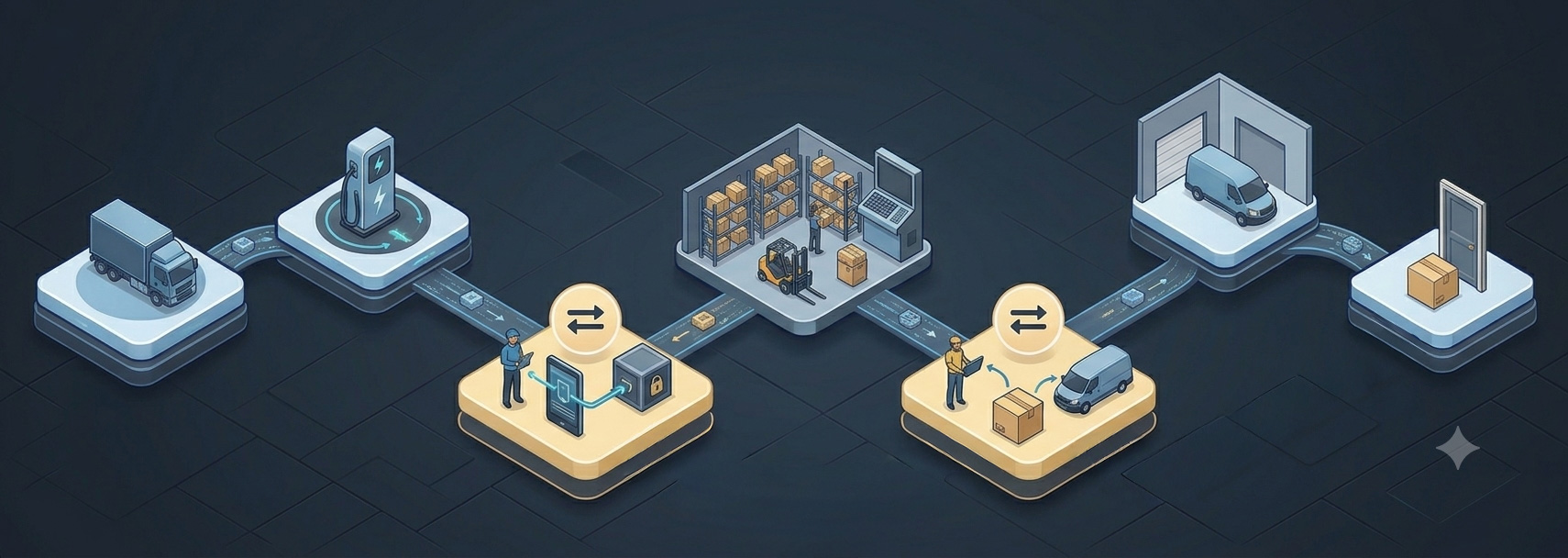
A system design challenge for Jungheinrich: how do three platforms, three personas, and four types of expertise work together across a single shared supply chain: safely, efficiently, and without confusion?

- Veteran driver
- Switched to an electric truck 6 months ago
- Delivers goods across Germany
- Plans routes
- Executes depot handovers
- Charging breaks add complexity to his previous routine
- Highway 80 km/h limit
- Mandatory 45-min break after 4.5 hrs
- Charge break every 570 km for 45 min
- Traffic delays compound all of the above

- Has solid experience, but new to the site
- Dock scheduling
- Charger coordination
- Driver Handovers
- Narrow time windows to coordinate arrivals
- System disruptions or delays can cause congestions

- solid delivery experience from his past
- Novice at B2B logistics
- Delivers a mixed route of store drop-offs and direct consumer orders from the same load
- Residential deliveries are routine,
but commercial store drop-offs are protocol-heavy - No clear escalation path for mid-route exceptions
Journey Map
I used the journey map to identify the moments where the system has to work hardest: context switches, competing constraints, and handover points where responsibility transfers between actors.
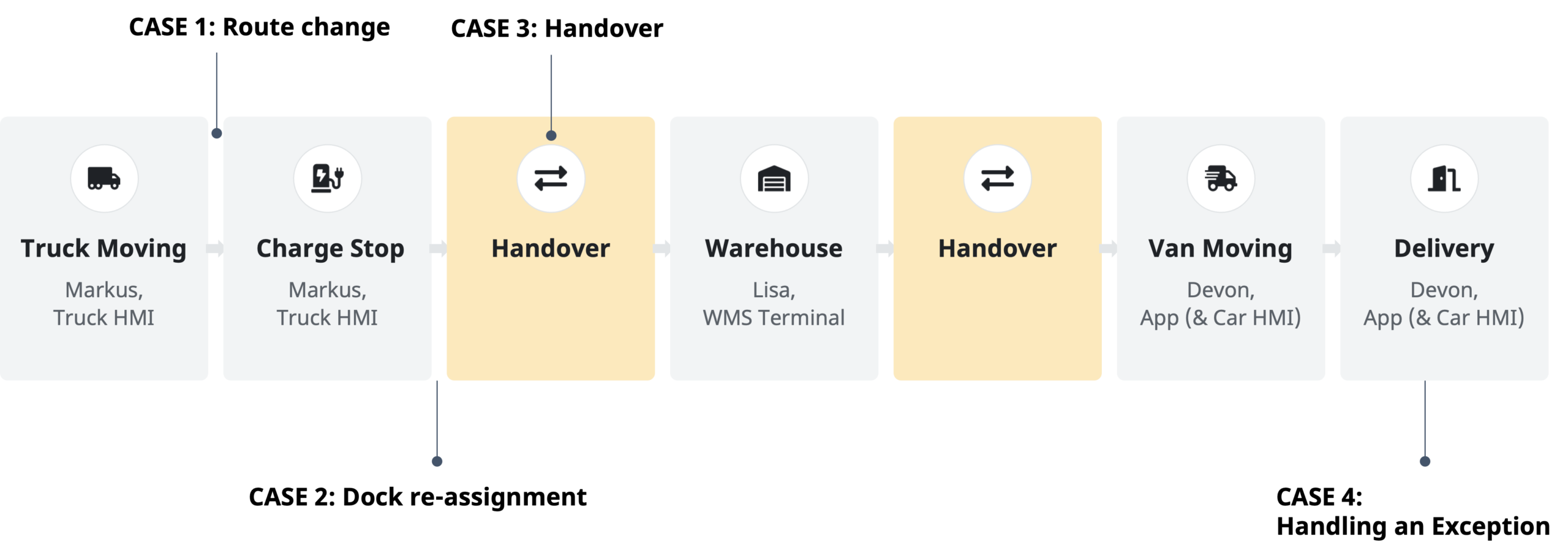
CASE 1 – Long-Haul Transport Route Change

Event:
A charging station on Markus’s planned route goes out of service while he’s driving
System response:
- Detects the outage via fleet network
- Replans autonomously: identifies next viable station within range, given load weight and current charge
- Withholds notification until the new route is calculated OR until Markus stops for a break if his current path is not affected
- Surfaces the route change on the HMI
- Markus approves (or rejects) by voice command
CASE 2 – Warehouse Dock Assignment
Event:
Lisa receives an update on Markus’ arrival time and charge status due to the route change
System response:
- Receives Markus’s updated charge curve and ETA from the fleet backend in real time
- Recalculates his expected charge on arrival at the hub
- Identifies that his original charger slot needs adjustment: he needs a longer charging window
- Flags the dock scheduling conflict to Lisa and proposes a revised dock and charger assignment based on current availability
- Lisa reviews the system’s proposed dock reassignment and confirms or adjusts in a few taps
- The dock and charger slot update propagates back to Markus’s HMI, he sees the confirmed dock number before he arrives
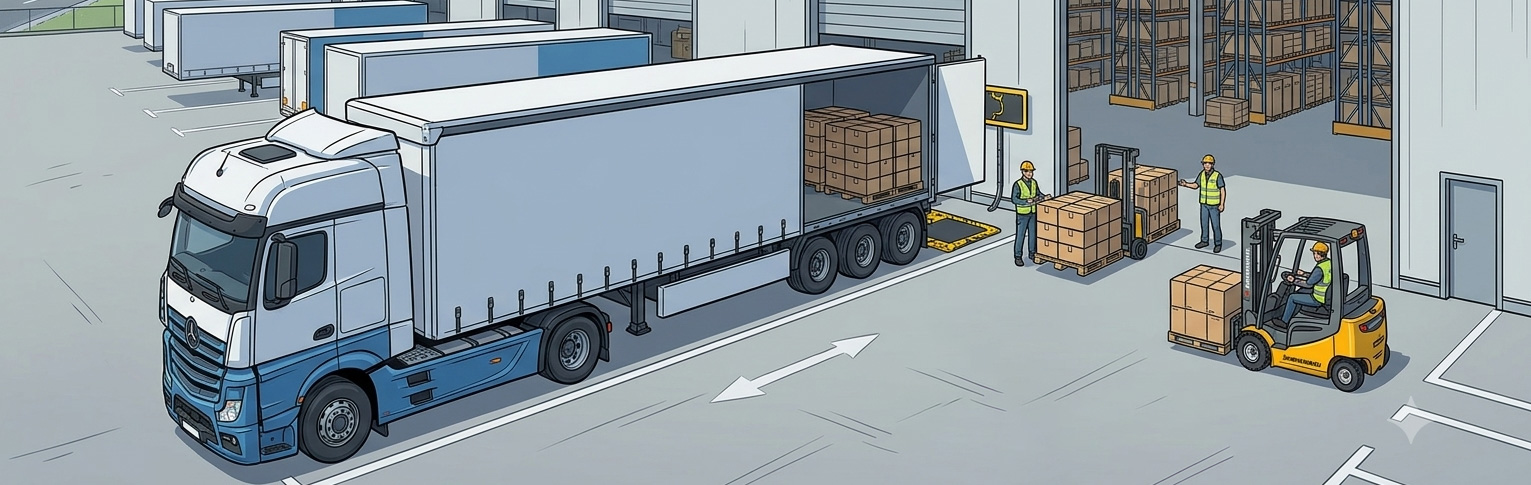
CASE 3 – Handover at the Warehouse
Event:
Markus arrives at the hub after a stressful drive, he’s been in driving mode for hours. The moment he enters the hub perimeter, his task and his relevant information change completely.
System response:
- Docking mode: Geofencing detects Markus entering the hub. The route recedes, the dock number and charger slot surfaces.
- Unloading mode: Markus parks correctly and the charger is connected. Transferring good from truck to dock is in progress.
- Handover confirmation: Markus reviews the manifest and logs the load as delivered. The warehouse worker verifies physical count and condition and confirms the handover independently.
Only when both confirmations are received does the system record the handover as complete and transfers responsibility
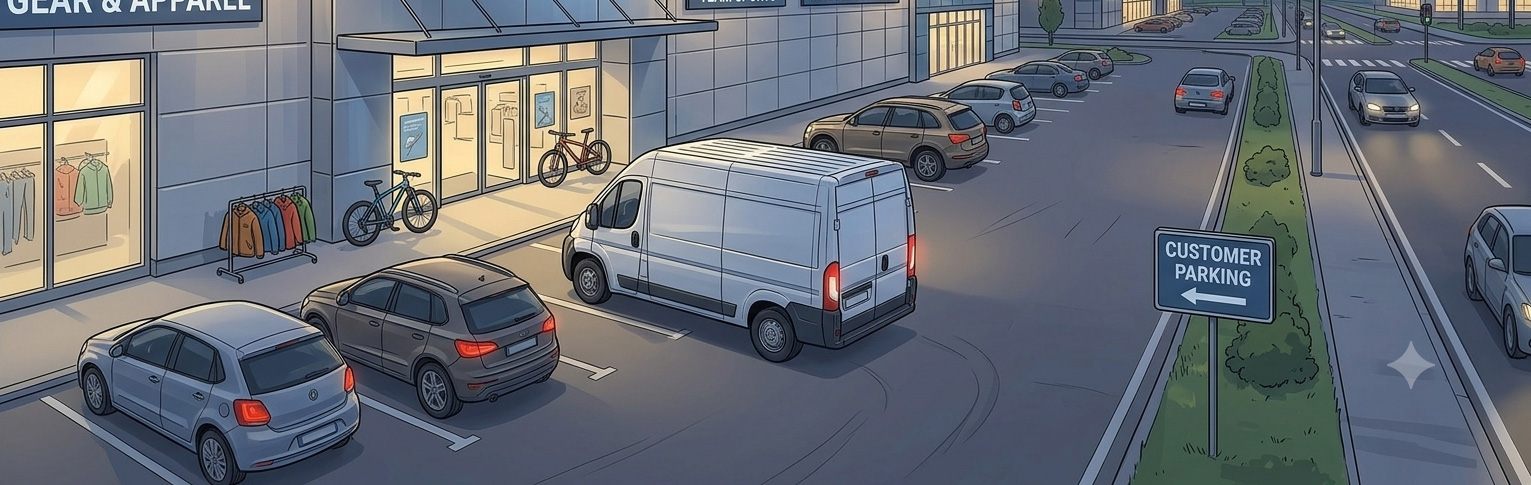
CASE 4 –Handling a Delivery Exception Case
Event:
Devon delivers SUPs at the retailer. One package got damaged along the way. The store manager opens the box and refuses the one package because the paddle is bent.
System response:
- Devon logs the exception in the app at the retailer
- He receives step by step guidance for the return protocol
- He returns the paddle to the warehouse physically and confirms it in the WMS
- The system matches Devon’s exception log against the physical return receipt and counts it as a clean completion
- 10th successful completion triggers an upgrade flag to Devon’s supervisor, who confirms it
- Devon receives a notification that he reached expert level and now sees a streamlined exception handling process
Takeaway on AI-assistance
I used Claude as an iterative design partner: the value was in stress-testing my own assumptions and translating locked decisions into consistent language fast enough to keep pace with my thinking, not in first drafts, which were often too neat or generic. The discipline that made it work was refusing to accept any output as final — every detail was challenged and re-specified by me before it counted as done. AI accelerated articulation; it didn’t replace the judgment calls that made the thinking good.